Transatlantic Telephone Line
Spring 2026
Introduction
This project is a reference class at SUNY Albany and was inspired by learning more about Artificial Intelligence. A few large companies want to bring back similar inspiration to the transatlantic telephone line. This line dates back to the 1860s, after people had been trying for centuries to understand electricity and how it worked. Instead of connecting information together among algorithms, it is important to know the formal basis of how we as a society have formed through technology. The transatlantic telephone line changed how we fundamentally look at communication across landscapes. Communication is also really integral to our society because it connects everything, even down to our computers and technology. To understand the present, we have to look at the fundamentals of the past and the unique perspective of government, innovations, centuries of patience, controversy, and evolutionary changes within technology. Our society would not be this advanced without heavy technological voices that expanded for our future.
Note: This entire project was made without AI and with a cognitive human mindset.
Articles that inspired this search:
Underwater cables are a vital piece of the AI buildout and internet — investment is booming
By Magdalena Petrova
https://www.cnbc.com/2025/11/08/big-tech-ai-underwater-cables.htmlThe Gulf’s AI Boom Has an Undersea Cable Problem
By Chris Hamill-Stewart
https://www.wired.com/story/the-gulfs-ai-boom-has-an-undersea-cable-problem/How Colt Meets AI Demands with Transatlantic Infrastructure
By Georgia Collins
https://technologymagazine.com/news/how-colt-meets-ai-demands-with-transatlantic-infrastructure
The Telephone: the Life Story of a Technology
by David Mercer
This edition of the Life Story of a Technology series includes a brief history of three centuries of the telephone. From this perspective, it dates back to the 1780s and ends in the 2000s. The exploration helped me understand how people were affected throughout the years and how big companies like Bell Technologies influenced society. This also brings to light the digital age and how that affected people when working with the telephone. The influence of the telephone also showed how it affected everyday life in workplaces, social settings, and personal lives. Giving a range of understanding of the evolution of technology throughout the years.
Website: https://archive.org/details/telephonelifesto0000merc
The fall of the Bell system: a study in prices and politics
By Peter Temin
Looks at the reorganization of leadership of the Bell (AT&T) and how much power the company had in the integration of society. The exploration of how the business of this large company was affected and how it was broken down. Includes international relations and economics within the connection of how our world communicates. This also explores the effects of ever-changing policy on the world.
Website: https://archive.org/details/fallofbellsystem0000temi
Tubes: A journey to the center of the Internet
By Andrew Blum
Looks at the inner workings of the Internet and how it works together in the space that is provided. Explores how the internet can be physically in another universe. The internet also brings in the space that also brought a lot of our bigger companies and connects our entire world. This framework looks at how we, as a society, connect through this online portal.
Transcontinental Telephone Address to Thomas A. Edison
by Miller Reese Hutchinson
The audio is for Thomas Edison on his accomplishments in West Orange, NJ, within his own library. It displays the world and explains how things are seen. This congratulates him with everyone who appreciated him. This also acknowledges Alexander Graham Bell and how people can transmit voice throughout the world.
The Bell System Technical Journal
by AT&T Journal
This collection is about the innovations that were written from 1922-1957. These journals are a compilation of theories, studies, photos, and innovations. This is provided with illustrations and mathematical notes. The write-ups include anything from long waves, mathematical theories, and even electronics like the microwave.
Website: https://onlinebooks.library.upenn.edu/webbin/serial?id=belltechj
Transatlantic cable construction and maintenance contract, 1953. Between UK and American Telephone and telegraph, Canadian Overseas Telecommunication Corp and Eastern telephone and Telegraph
by National Museum of American History
This is a contract between the UK and America when they were overseeing the telegraph. This is within the Smithsonian archives. This is a video that is in their database from 1953. This was the start of understanding how we could connect Europe and the US through the transatlantic telephone line.
Website: https://sova.si.edu/record/nmah.ac.0205/ref11572?s=0&n=10&t=A&q=transatlantic+telephone&i=1
The Telephone
by PBS
This documentary gives insight and an overview of how the trans Atlantic telephone line came to be, with both Alexander Graham Bell and Thomas Watson. It explores the journey from the start in America, further growth, and the exploration that it had to expand across the sea. The spring is an impact of Watson's life in the world, and how they realized electricity can be the spark everywhere. This also goes into the workforce that was behind everyone who came together to get this done.
Website: https://www.pbs.org/wgbh/americanexperience/films/telephone/
Fiber Optics and the Internet
by Barney Warf
This gives an understanding and historical context into fiber optic cables and how they connected using the trans Atlantic telephone line. This brief description gives an understanding of how it also improved many different capabilities of today, including the World Wide Web. These fiber cables gave great headway into expanding all over the globe, including making sure it expanded to places in our world. The fiber optic cables help improve the function of everyday life.
Place: The SAGE Encyclopedia of the internet
CYRUS FIELD'S BIG DREAM: The Daring Effort to Lay the First Transatlantic Telegraph Cable.
by Kirkus Reviews
To understand the 19th century, this is to help with England and America working together in a collaboration to get the transatlantic telephone line across the sea. The connection started between America and Canada in this joint effort. This working part included the Queen and the President sharing a signal through Morse code, earning its own technological achievement among governments. This also goes into the technical problems that were endured.
Place: Library, Information Science & Technology Abstracts
Electrical Telegraph
by Mark Cartwright
Different variations of the telegraph throughout history and countries. The development of piners and how they influenced later on technological changes. With bringing in the introduction of Morse code during the Industrial Revolution. This brings in further patchwork and developments into the consequences of the telephone line being laid down.
Place: World History Encyclopedia
The Deal of the Century: the Breakup of AT&T
by Steve Coll
Steven Coll is a Pulitzer Prize winner in nonfiction for his journalism. He offers a perspective on the biggest takedown: the largest antitrust case in history, AT&T. Coll offers perspective and answers questions left by the public. He looks through the 50,000 pages that have various perspectives in the case.
The development of electrical technology in the 19th century. 2, The telegraph and the telephone
By King, W. James
From the Smithsonian Institution, this brings a second volume that covers the history of technology from the early 1700s into the 1800s. The perspective illustrates how electricity worked in the 19th century. Going into how the telegraph was created by Joseph Henry. This also includes Henry advising Alexander Bell.
Website: https://books.google.com/books/about/The_Development_of_Electrical_Technology.html?id=UzwO0gEACAAJ
The idea factory: the Bell Labs and the great age of American innovation
By Jon Gernter
Looks at AT&T throughout the 19th century, showing how it was very innovative for its time. Looking at many innovative minds within Bell Labs, including Claude Shannon. This also looks at how many works were brought to life, including earlier cell phones. This also has innovation lessons they could teach the future with.
Website: https://books.google.com/books?id=1M_znQEACAAJ&source=gbs_book_other_versions_r&cad=1
Telephone: the first hundred years
by John Brooks
Looks at the telephone over the century. This helped bring a perspective of the start of AT&T and how it became appreciated. Expands on the history of the failures before we as society advanced so far. Demonstrating the specialty of people connecting across the ocean.
The history of the telephone
by Herbert Newton Casson
Goes into the exact story of how the telephone was transmitted. This historical piece explains the background and how it connected to different countries. It also explains how the economic structure changed with this invention. Explored how the world of business came around this invention.
Website: https://www.gutenberg.org/cache/epub/819/pg819-images.html
Bell Laboratories Record Issue List
by Bell Labs Record
The Records list is from 1925-1961 and explores the different records they have for testing. They include trains to semiconductors. This is to show implementations of how they updated themselves through the decades. These include illustrations on how things work with inventions they are in the works for. They also show how they used different formats, including early innovations in computers.
Website: https://www.worldradiohistory.com/Bell_Laboratories_Record_Issue_Key.htm
The Atlantic Cable
by Bern Dibner
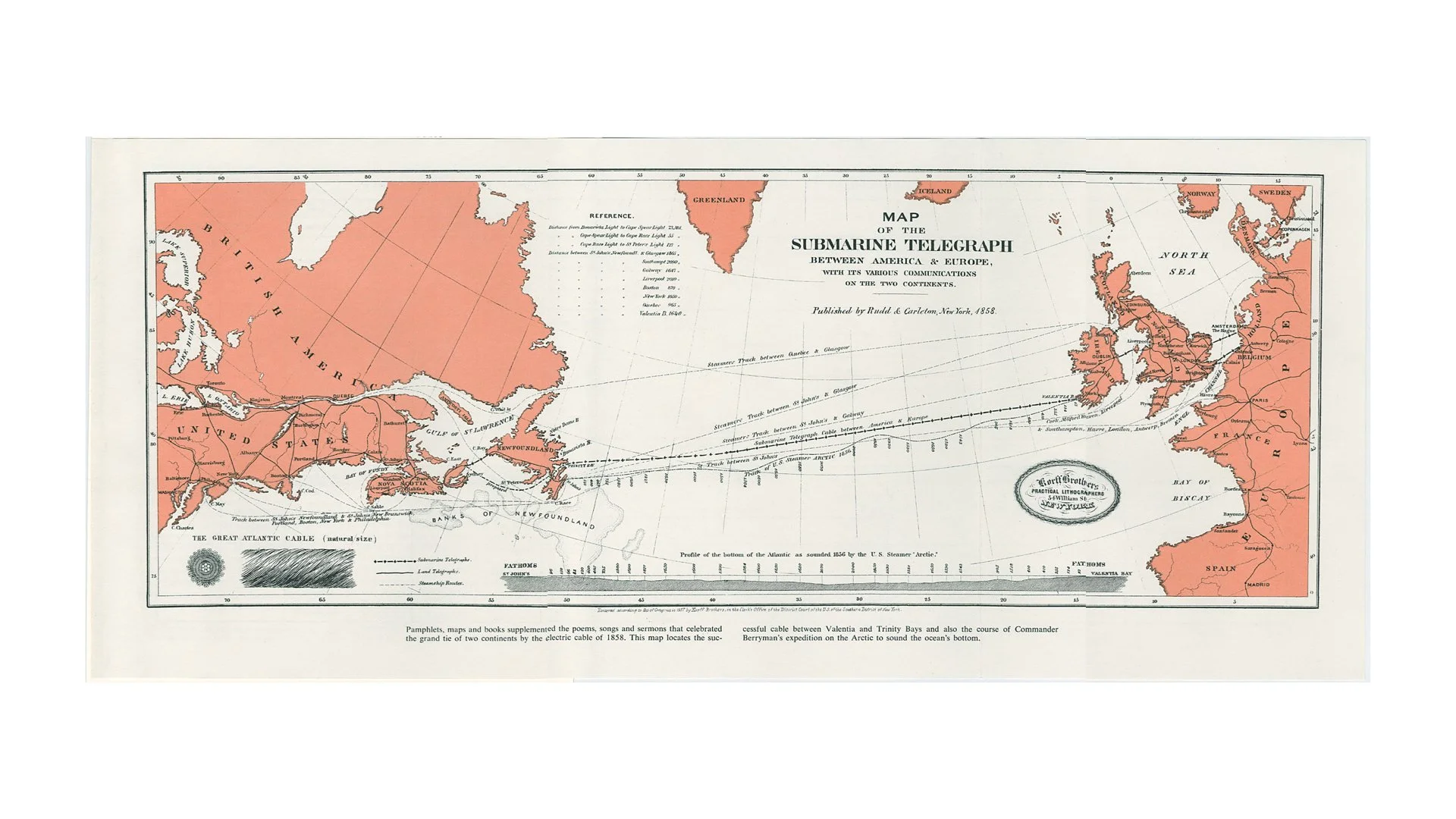
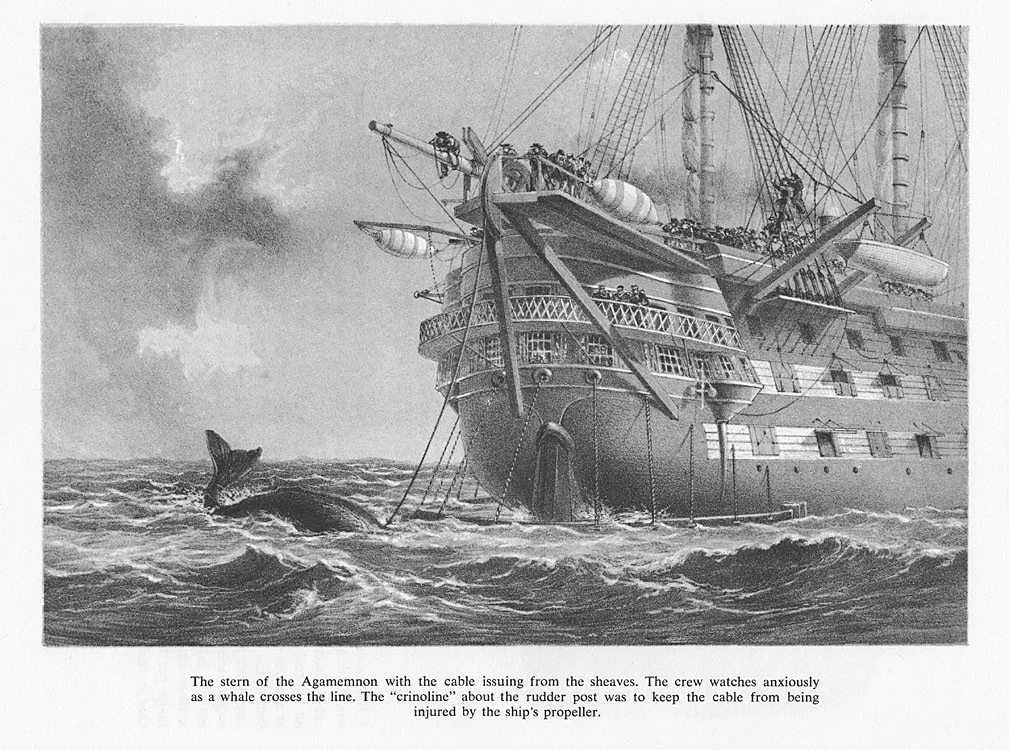
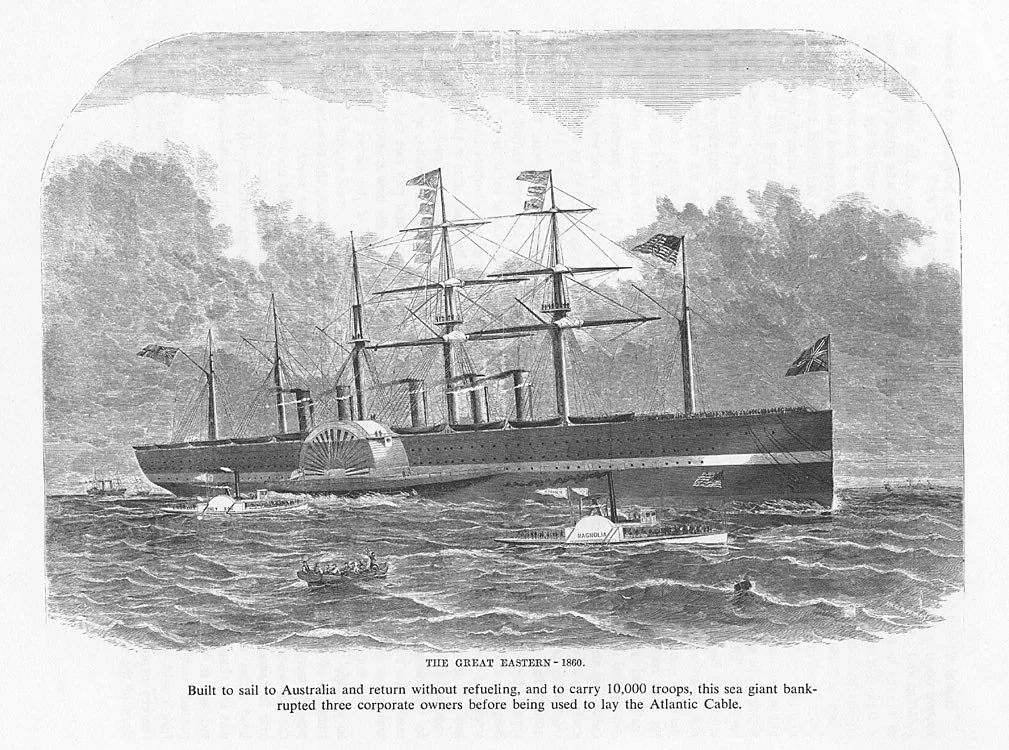
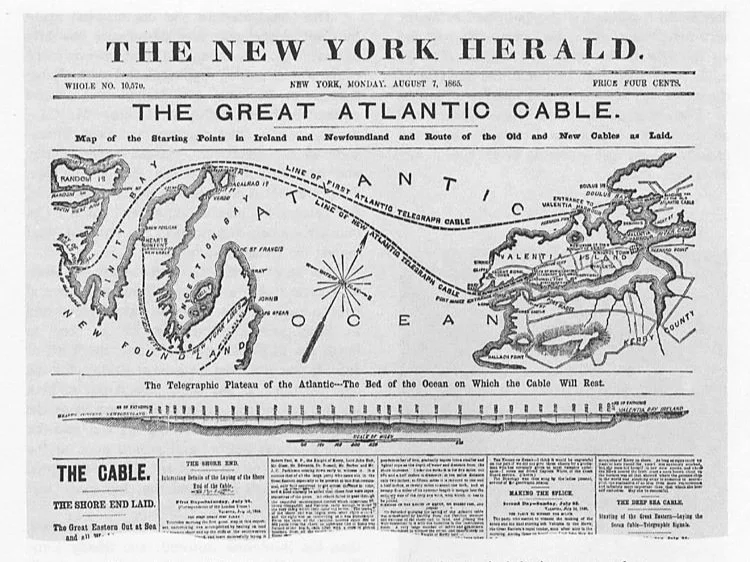
Explores the exploration and placement of the telephone line in the Atlantic Ocean in the 19th century. This also includes information on the different boats and how these operations worked. Dibner also explores the mechanics of how the cable was laid down in the ocean. Using graphs, maps, and illustrations to set the scene.
Website: https://monoskop.org/images/9/9e/Dibner_Bern_The_Atlantic_Cable.pdf
Who is credited with inventing the telephone?
by Science Reference Section
This explains who the sole inventor of the phone is, with the understanding that it could be given to three different people. Each person had their own different topic in which they proceeded to make the telephone better. This also goes over the light frameworks of the history of the patents and grants that were given to individuals. Despite overall Bell being given the credit.
U.S. Sprint in Atlantic Cable Deal
by Calvin Sims
This New York Times article helps us understand the Atlantic cable deal and how it came across to people. As a team, as if it is a race among the waters, this 1989 article helps bring in an understanding of how AT&T could move forward with the different cables that are presented to us. This also helps understand the complexities of the government when it comes to bringing this cable along. The article goes into the future prospects the company has.
Place: The New York Times Digital Collection
Regulation, innovation and market structure in International Telecommunications: The case of the 1956 TAT1 submarine cable.
by Jill Hills
This is to understand the case of the 1956 TAT1 cable that went across the Atlantic Ocean. This includes understanding the different cables that went across and making sure that this cable could actually work solidly. This also came out with many different problems, including freezes. They got more help from the government, making sure this got on board.
Place: Historical Abstracts
Atlantic Cables
by History of the Atlantic Cable & Undersea Communications
This is an encyclopedia of information about the Atlantic Cable. This is a breakdown of every cable that has gone into the water, including the history behind it, with sources and information attached. This index collects information to support research on this topic and is freely available to the public. As they are also still collecting there own personal research.
Place: History of the Atlantic Cable & Undersea Communications
-
Bell Laboratories Record. BELL LABORATORIES RECORD -The “Phone Company” employee tech publication. (n.d.). https://www.worldradiohistory.com/Bell_Laboratories_Record_Issue_Key.htm
Blum, A. (2012). Tubes : a journey to the center of the Internet (1st ed.). Ecco.
Brooks, J., & Harper & Row, P. (1976). Telephone : the first hundred years (First edition.). Harper & Row, Publishers.
Casson, H. N. (1910). The history of the telephone. The Project Gutenberg. https://www.gutenberg.org/cache/epub/819/pg819-images.html
Cartwright, M. (2023, March 24). Electrical Telegraph. World History Encyclopedia. https://www.worldhistory.org/Electrical_Telegraph/
Coll, S. (1988). The deal of the century : the breakup of AT & T (1st Touchstone ed.). Simon & Schuster.
CYRUS FIELD’S BIG DREAM: The Daring Effort to Lay the First Transatlantic Telegraph Cable. (2018). Kirkus Reviews, 86(13), 1.
Dibner, B. (1964). The Atlantic cable. ([2d ed.].). Blaisdell Pub. Co.
Gernter, J. (2012). The idea factory: the Bell Labs and the great age of American innovation. Penguin Press.
Hills, J. (2007). Regulation, innovation and market structure in International Telecommunications: The case of the 1956 TAT1 submarine cable. Business History, 49(6), 868–885.
History of the Atlantic Cable & Submarine Telegraphy. (n.d.). https://atlantic-cable.com/
Hutchinson, M. R. (1915). Transcontinental Telephone Address to Thomas A. Edison. Project Gutenberg. https://www.gutenberg.org/ebooks/10233
King, W. J. (1962). The development of electrical technology in the 19th century. Smithsonian Institution.
Mercer, D. (2006). The telephone: the life story of a technology. Greenwood Press.
Sims, Calvin. "U.S. Sprint in Atlantic Cable Deal." New York Times, 10 Mar. 1989. The New York Times Digital Collection, link.gale.com/apps/doc/A175657769/SPN.SP18?u=nysl_ca_dmvacces&sid=bookmark-SPN.SP18&xid=c118f716. Accessed 2 Aug. 2026.
Simon, K., & Goodman, K. (1997, February 3). The telephone. PBS. https://www.pbs.org/wgbh/americanexperience/films/telephone/
Temin, P. (1987). The Fall of the Bell System: A Study in Prices and Politics (Reprint). Cambridge University Press. https://doi.org/10.1017/CBO9780511572388
Warf, B. (2018). Fiber optics and the internet. In The SAGE Encyclopedia of the internet (Vol. 3, pp. 374-376). SAGE Publications, Inc., https://doi.org/10.4135/9781473960367.n107
Western Union Telegraph Company records | NMAH.AC.0205 | sova, Smithsonian Institution. (n.d.). https://sova.si.edu/record/nmah.ac.0205
Who is credited with inventing the telephone?. The Library of Congress. (n.d.). https://www.loc.gov/everyday-mysteries/categories/technology/item/who-is-credited-with-inventing-the-telephone/ text goes here
-
All images are from The Atlantic Cable by Bern Dibner
Pages - 74